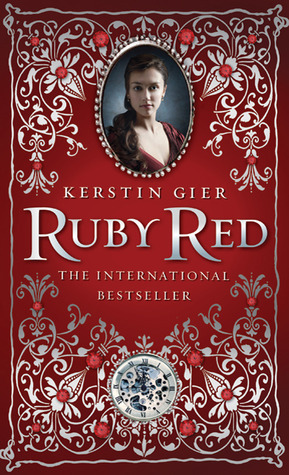
Ruby Red is the first book in the Edelstein series. It follows sixteen year-old Gwyneth who unexpectedly replaces her cousin Charlotte in a secret time travel society when it’s discovered that she has the female time traveling gene, not Charlotte. After being kept out of the loop of the society’s mysteries all her life, Gwyneth has to learn what the rules are of time traveling and her duties as a time traveler. She’s not alone in learning as she has Gideon, the obnoxious male equivalent of Gywenth from another family, to help her learn the ropes of time travel.
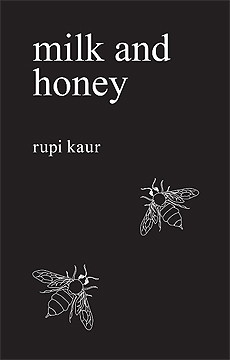
Goodreads Description: milk and honey is a collection of poetry and prose about survival. It is about the experience of violence, abuse, love, loss, and femininity. It is split into four chapters, and each chapter serves a different purpose, deals with a different pain, heals a different heartache. milk and honey takes readers through a journey of the most bitter moments in life and finds sweetness in them because there is sweetness everywhere if you are just willing to look
Bestsellers usually make their way on to my TBR, unless they’re from certain genres I steer away from, like poetry.
I’ve never been able to stomach poetry. Maybe I’m not good with my emotions, too judgmental, or just don’t understand it, but a lot of poetry tends to make me feel uncomfortable. My impression of poetry has been skewed by poems in Tumblr posts and Instagram captions that always seemed more cringey than “𝓭𝓮𝓮𝓹”. So, even though everyone under the sun had already read Milk and Honey by Rupi Kaur, I never had any intention of reading 𝐛𝐞𝐜𝐚𝐮𝐬𝐞 𝐢𝐭’𝐬 𝐚 𝐛𝐨𝐨𝐤 𝐨𝐟 𝐩𝐨𝐞𝐦𝐬.
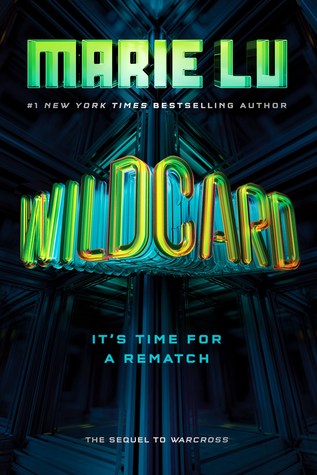
Goodreads Description:Emika Chen barely made it out of the Warcross Championships alive. Now that she knows the truth behind Hideo’s new NeuroLink algorithm, she can no longer trust the one person she’s always looked up to, who she once thought was on her side.
Determined to put a stop to Hideo’s grim plans, Emika and the Phoenix Riders band together, only to find a new threat lurking on the neon-lit streets of Tokyo. Someone’s put a bounty on Emika’s head, and her sole chance for survival lies with Zero and the Blackcoats, his ruthless crew. But Emika soon learns that Zero isn’t all that he seems–and his protection comes at a price.
Caught in a web of betrayal, with the future of free will at risk, just how far will Emika go to take down the man she loves?
Let’s get right into it: this book was disappointing.
Wildcard was the much-anticipated, second book in the Warcross duology by Marie Lu. It bums me out that I didn’t enjoy this book as much as I thought I would because I was so blown away by the first book, Warcross. The technology, asian american representation, and eventual shocking plot twist in Warcross had me itching for Wildcard’s release.Needless to say, I had high expectations—and that’s my fault.
Honestly, I didn’t learn anything after reading Warcross though. Like, ᴅᴏɴ’ᴛ ʜᴀᴠᴇ ᴇxᴘᴇᴄᴛᴀᴛɪᴏɴs. (Specifically, don’t expect that a book is a standalone—but you can read more about that particular frustration in my book review for Warcross.)
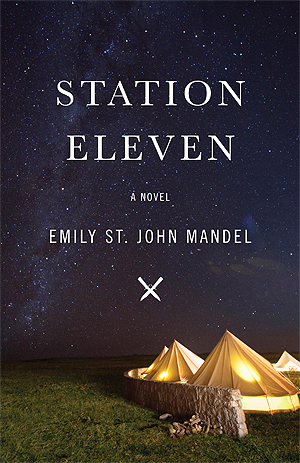
Goodreads Description:An audacious, darkly glittering novel set in the eerie days of civilization’s collapse, Station Eleven tells the spellbinding story of a Hollywood star, his would-be savior, and a nomadic group of actors roaming the scattered outposts of the Great Lakes region, risking everything for art and humanity.
One snowy night a famous Hollywood actor slumps over and dies onstage during a production of King Lear. Hours later, the world as we know it begins to dissolve. Moving back and forth in time—from the actor’s early days as a film star to fifteen years in the future, when a theater troupe known as the Traveling Symphony roams the wasteland of what remains—this suspenseful, elegiac, spellbinding novel charts the strange twists of fate that connect five people: the actor, the man who tried to save him, the actor’s first wife, his oldest friend, and a young actress with the Traveling Symphony, caught in the crosshairs of a dangerous self-proclaimed prophet.
Sometimes terrifying, sometimes tender, Station Eleven tells a story about the relationships that sustain us, the ephemeral nature of fame, and the beauty of the world as we know it.
After putting this book on the back-burner for over two years, it has officially made it to my all-time favorites list.
First off, it was not what I was expecting at all. I committed the age-old crime of judging Station Eleven by its cover and, based off the (truly minimal) stars on the front, I assumed the story would take place in space. That, plus the fact that Station Eleven sounded like a space station (which I technically wasn’t wrong to believe), the book gave me the impression of being a space opera. While that wasn’t the case, I was pleasantly surprised that the book was so much better than my initial estimation of it.
I know some of you are thinking, “But, the book is clearly not about space in the synopsis,” and, I agree. Buuuut, 𝘐 𝘢𝘭𝘴𝘰 𝘥𝘪𝘥𝘯’𝘵 𝘳𝘦𝘢𝘭𝘭𝘺 𝘳𝘦𝘢𝘥 𝘵𝘩𝘦 𝘴𝘺𝘯𝘰𝘱𝘴𝘪𝘴 𝘢𝘯𝘥 𝘫𝘶𝘴𝘵 𝘬𝘯𝘦𝘸 𝘵𝘩𝘢𝘵 𝘐 𝘸𝘢𝘯𝘵𝘦𝘥 𝘵𝘰 𝘳𝘦𝘢𝘥 𝘵𝘩𝘦 𝘣𝘰𝘰𝘬 𝘣𝘦𝘤𝘢𝘶𝘴𝘦 𝘰𝘧 𝘢𝘭𝘭 𝘵𝘩𝘦 𝘩𝘺𝘱𝘦 𝘢𝘳𝘰𝘶𝘯𝘥 𝘪𝘵 𝘴𝘰 𝘴𝘩𝘩𝘩𝘩𝘩. We’ve already established that I’m a sheep.
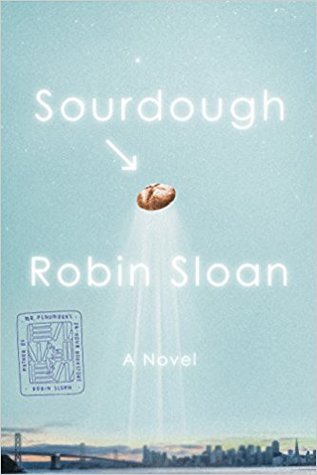
Goodreads Description: Lois Clary, a software engineer at a San Francisco robotics company, codes all day and collapses at night. When her favourite sandwich shop closes up, the owners leave her with the starter for their mouthwatering sourdough bread.
Lois becomes the unlikely hero tasked to care for it, bake with it and keep this needy colony of microorganisms alive. Soon she is baking loaves daily and taking them to the farmer’s market, where an exclusive close-knit club runs the show.
When Lois discovers another, more secret market, aiming to fuse food and technology, a whole other world opens up. But who are these people, exactly?
How do I even begin to write a review for this book?
The most basic and superficial description of this novel is that it is a book about baking bread. Your initial reaction to this statement might be to dismiss this book, and I get it—who wants to read a story about bread? Nonetheless, Sourdough won the 2017 Goodreads Choice Award for Fiction, a point that prevented me from disregarding the novel and ultimately made me decide to give it a shot.
In celebration of March being Women’s History Month, I aimed to exclusively read female-authored books for the thirty-one days.
With the exception of one book, I made good on my goal and ended up having my best reading month this year. It’s really not much of a feat considering how busy I was in January and February and the complete disregard of my TBR pile that ensued. But, I’ll accept anything remotely close to win—it keeps me motivated 😅.
If you read my Women’s History Month Read-a-thon, you’ll know that the majority of the novels I read last month were young adult (YA) contemporaries. It wasn’t on purpose. ɪ ᴅɪᴅ ʀᴇᴀᴅ ᴀ ʙᴏᴏᴋ ʙʏ ᴏᴘʀᴀʜ. I think it just played out that way because I’m a giant mood reader, so I peruse the blogosphere when picking out my next reads. That results in me repeatedly reading YA since I mostly follow YA-oriented book blogs.
Don’t get me wrong though, there’s nothing wrong with YA. In fact, I made this conclusion after my read-a-thon:
There are so many brilliant women contributing their powerful thoughts for a more competent, diverse, and tolerant society—and there’s no place where it’s more apparent than YA bookshelves.
Is having a backlog of books to review the opposite of a TBR 🤔?
If you saw my recent post, /Modified/ Mini Book Reviews, you might remember that I’m REALLY behind on book reviews. In it, I quickly ticked off one reason (which I’ll re-enumerate in this post) for this setback. However, I know I can’t be the only book blogger with this problem and wanted to further investigate how this issue arose. So, here are some reasons I don’t always review a book:
If you’re anything like me, you may know of Oprah’s billionaire status, book club, and long-running talk show in which she once famously gifted cars to everyone in her audience.
Annnnd… that’s about it.
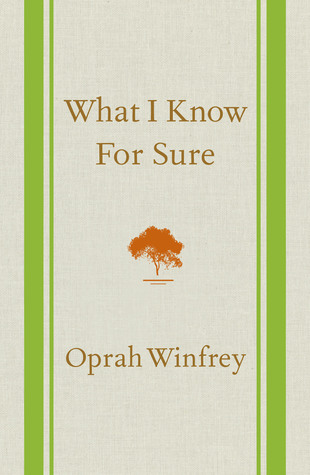
Until recently finishing her book, What I Know for Sure, I had never consumed any content Oprah-related. Reading a book by Oprah definitely feels like something a put together, middle-aged adult would do, although that’s definitely not what I am 😅. I’m a lost, confused, and (frankly)quite scared young adult, so that’s probably the biggest reason I picked up the book.
Recently, I was scrolling through my notes app on my phone, where I type any thoughts I have while reading a story, and saw that I have notes from books I read back at the beginning of 2018. This is why I should just review books right after reading them 🤦♀️.
I’ve put off reviewing the books for one reason or another, but it’s truly just come to the point where even if I did want to review them, I can’t because 𝘐 𝘤𝘢𝘯’𝘵 𝘳𝘦𝘮𝘦𝘮𝘣𝘦𝘳 𝘦𝘯𝘰𝘶𝘨𝘩 𝘢𝘣𝘰𝘶𝘵 𝘵𝘩𝘦𝘮. Of course there are the notes I made, but many of them are incomplete and wouldn’t be enough for me to write up a thorough or even mini review.
Hence, my shoddy solution: /modified/ mini review *posts!
*There’s just too many books I never reviewed, so I have to split these up into multiple posts 😬.
Here, you can read my bullet point thoughts as they are in my notes and any quotes I saved while reading each book. In this way, I can finally share the backlog of half-baked thoughts I have on these books, and you can… read them 😅? I’m not sure how this will benefit you all, but hopefully by reading how these books affected me, you’ll get a glimpse as to how these books may resonate with you.
It’s a shoddy solution, but it’s my shoddy solution 😤.:
Goodreads Description: Dimple Shah has it all figured out. With graduation behind her, she’s more than ready for a break from her family, from Mamma’s inexplicable obsession with her finding the “Ideal Indian Husband.” Ugh. Dimple knows they must respect her principles on some level, though. If they truly believed she needed a husband right now, they wouldn’t have paid for her to attend a summer program for aspiring web developers…right?
Rishi Patel is a hopeless romantic. So when his parents tell him that his future wife will be attending the same summer program as him—wherein he’ll have to woo her—he’s totally on board. Because as silly as it sounds to most people in his life, Rishi wants to be arranged, believes in the power of tradition, stability, and being a part of something much bigger than himself.
The Shahs and Patels didn’t mean to start turning the wheels on this “suggested arrangement” so early in their children’s lives, but when they noticed them both gravitate toward the same summer program, they figured, Why not?
Dimple and Rishi may think they have each other figured out. But when opposites clash, love works hard to prove itself in the most unexpected ways.
Indian American Protagonists.
If I had to summarize in two words why I picked this book up, it’d be just that: Indian American Protagonists.
Being half Indian myself, this book immediately sparked my attention when it blew up in the blogosphere last year and people were celebrating it for being a refreshing young adult novel. Because I grew up in such a diverse community with many unique Indian Americans, I was personally keen to see how they would be portrayed in the story. On top of that, I hoped that I could learn something new about the Indian side of my blood—particularly arranged marriages. Maybe it’s my fault for placing so much on the book, but I didn’t love When Dimple Met Rishi.



 Belle Can Read